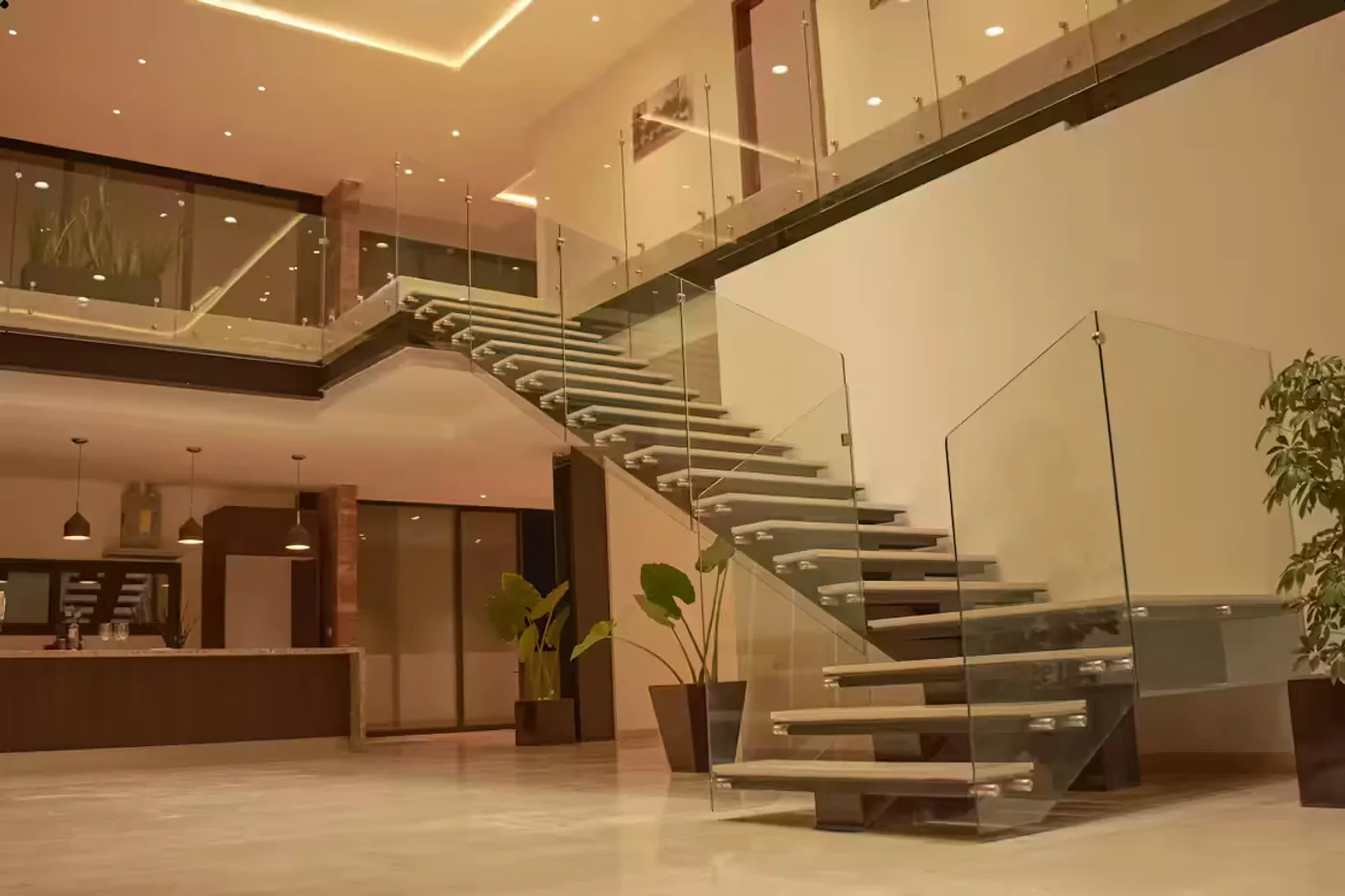
Hardwood floating stair installation in a Bay Area home

Wood Tread Options for Your Floating Staircase

The structure is laser-cut steel. What you choose is the wood. We carry white oak, walnut, ash, and teak — every tread pre-acclimated to your home's actual indoor conditions before installation.

At San Francisco Floating Stairs Specialists , wood tread selection is a structural and aesthetic decision made together with the client — not a catalog choice added at the end.

White oak is the most requested wood species for Bay Area floating stairs. It accepts a wide range of stains and oil finishes, holds up well under daily traffic, and its tight grain pattern ages cleanly without showing wear unevenly. Walnut offers a richer, darker tone with dramatic grain — a natural pairing with dark steel and frameless glass in modern Pacific Heights or Marin County interiors.

Ash provides a lighter, more open grain pattern at a more accessible price point. It machines cleanly and finishes consistently, making it a practical choice when the design calls for a bright, Scandinavian-influenced look. Teak is the densest option — an oily hardwood with natural resistance to moisture that performs well in coastal Bay Area conditions or indoor-outdoor installations near Marin or the Peninsula.

Every tread is acclimated to your home's actual indoor humidity and temperature conditions before installation. Skipping this step leads to movement, cracking, and finish separation. We build the acclimatization window into our project schedule as a non-negotiable step — not an optional add-on.

Tread thickness is determined by span, load, and species — not by default. We calculate structural thickness for each installation based on cantilever length and CBC load requirements, then match that specification to your selected wood species. Tread edges are either eased, chamfered, or finished square depending on the design intent.
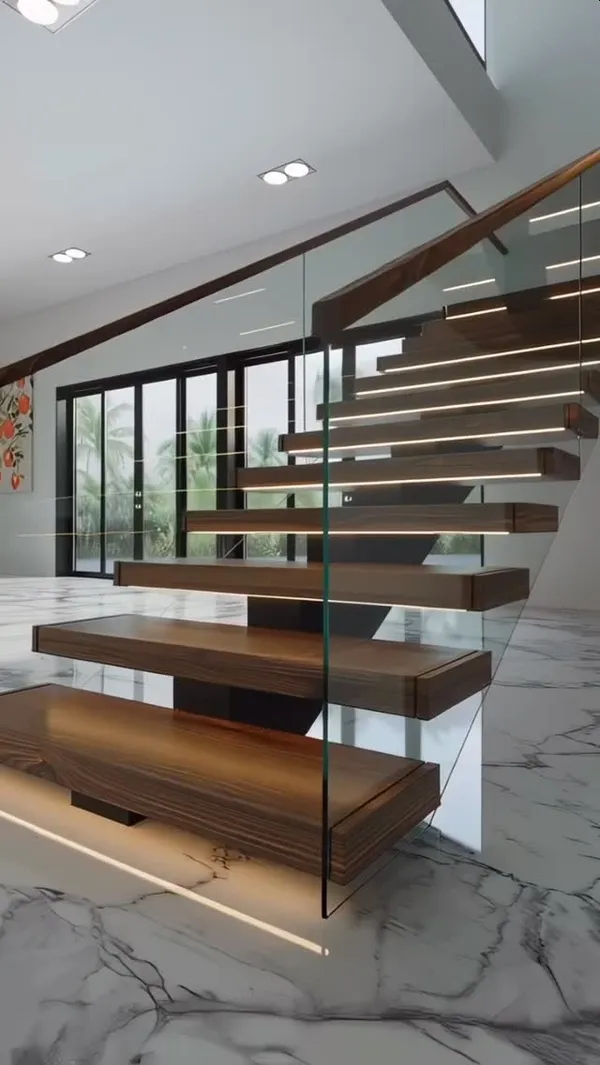
Walnut wood tread floating stairs with glass railing

Select your tread species today.

We'll review your space and recommend the right wood, thickness, and finish for your project.

Wood Tread Selection & Installation

01
Species Review & Sample Selection
We walk through available species, discuss finish range, and provide physical samples so you can evaluate color and grain against your interior materials under your home's actual lighting.
02
Structural Thickness Calculation
Tread thickness is calculated based on cantilever span, load requirements, and wood species density. We specify the structural minimum, then review finish profile options above that threshold.
03
Acclimatization
Treads are delivered to your property and stored in the installation space for the required acclimatization period before installation begins. This step is non-negotiable.
04
Shop Fabrication & Fitting
Steel cantilever supports are fabricated to exact field dimensions. Treads are pre-drilled and fitted to the steel in our shop before delivery. No cutting on site.
05
Installation & Finish Review
Treads are installed and finish is reviewed under installed conditions. We address any touch-up requirements before project handoff.

Wood Tread Floating Stairs — FAQ

What is the best wood for floating stairs in the Bay Area?
White oak performs best for most Bay Area residential stairs — dimensionally stable, accepts a wide range of finishes, and holds up well under daily traffic. For coastal or more humid conditions, teak offers better natural moisture resistance. We'll make a specific recommendation after reviewing your space.
Does wood movement affect floating stairs?
Yes, which is why we require acclimatization before installation. Treads delivered cold or in different humidity conditions from your home will move after installation. We build the acclimatization window into the project schedule and verify conditions before treads are secured.
How are wood treads refinished over time?
Most oil-finished treads can be spot-refinished without full removal. Poly-finished treads typically require sanding and re-coating when surface wear becomes visible. We recommend oil finishes for floating stairs for this reason — easier to maintain without disrupting the installation.
Can I change my wood tread species after ordering?
Species selection needs to be confirmed before fabrication begins, as thickness calculations are species-specific. Changes after that point require revised engineering and extend the fabrication timeline.
How thick are the wood treads?
Structural thickness ranges from 1.75 inches to 3 inches depending on cantilever span, load, and species density. We calculate the required minimum for your specific configuration and discuss finish profile options above that threshold.

Choose Your Wood Tread Today

Contact San Francisco Floating Stairs Specialists for species recommendations and a full project quote.